
During the colder months, subtle changes in energy, metabolism, and overall well-being are common. Patients may report fatigue, weight fluctuations, increased sensitivity to cold, or low vitality. While these symptoms can have multiple causes, they may also indicate underlying thyroid dysfunction, particularly hypothyroidism.
Seasonal factors such as reduced physical activity, shorter daylight hours, and dietary changes, can make these symptoms more noticeable. Timely and accurate assessment of thyroid function provides essential guidance for clinical decisions, supporting appropriate therapy adjustments and long-term health management.
Monitoring multiple thyroid markers provides a comprehensive view of thyroid health.
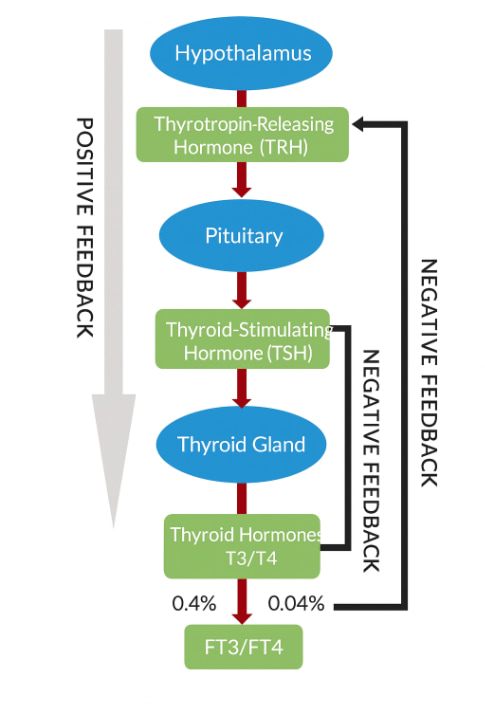
The diagram shows the main hormones and feedback mechanisms involved in thyroid function.
Essential Thyroid Markers
|
Marker |
Clinical Role & Significance |
|
TSH (Thyroid Stimulating Hormone) |
First-line screening for thyroid dysfunction; sensitive indicator regulated by hypothalamic-pituitary-thyroid feedback |
|
TT4 (Thyroid Stimulating Hormone) |
Main circulating thyroid hormone; evaluates hyperthyroidism, primary/secondary hypothyroidism, and TSH-suppressive therapy |
|
TT3 (Total Triiodothyronine)
|
Reflects thyroid impact on peripheral tissues; useful for early hyperthyroidism detection and monitoring relapses |
|
FT3 (Free Triiodothyronine) |
Biologically active hormone; unaffected by TBG; sensitive for hyperthyroidism, including T3-dominant cases |
|
FT4(Free Thyroxine) |
Free, active thyroxine; early marker for hypothyroidism and hyperthyroidism; preferred for assessing thyroid insufficiency |
Assessing all five markers ensures early detection of subclinical hypothyroidism, hyperthyroidism, or altered metabolic status, which is particularly important during winter when symptoms may be masked or attributed to seasonal factors.
Routine Thyroid Function Panels
|
Panel |
Tested Markers |
Target Population |
Clinical Significance |
|
TSH only |
TSH |
All routine check-up populations |
Primary screening for thyroid dysfunction |
|
3-Marker Panel |
TSH, FT4, FT3 |
All routine check-up populations |
Measures active thyroid hormones; reflects true thyroid function; unaffected by TBG variations |
|
5-Marker Panel |
TSH, FT4, FT3, TT4, TT3 |
Check-ups, follow-ups, or medication monitoring |
For patients with confirmed thyroid disorders or under treatment; provides comprehensive evaluation of therapy effectiveness and side effects |
Results Interpretation
| Marker | Hyperthyroidism | Hypothyroidism | Hashimoto's thyroiditis |
| TSH (Thyroid Stimulating Hormone) | Primary ↓ | Primary ↑ | The condition may be present regardless of whether thyroid function is normal or abnormal. |
| Secondary ↑ | Secondary ↓ | ||
| TT3 (Total Triiodothyronine) | ↑ | ↓ | |
| TT4 (Total Thyroxine) | ↑ | ↓ | |
| FT3 (Free Triiodothyronine) | ↑ | ↓ | |
| FT4(Free Thyroxine) | ↑ | ↓ |
Recommended test population

Poclight’s dry CLIA platform offers significant benefits for thyroid diagnostics:
1) Low Sample Volume & Rapid Results
Only 50 μL of serum or plasma needed, with 5-10 minute turnaround, ideal for fast clinical decisions.
|
Item |
Sample type |
Assay duration |
Sample volume |
Cut-Off value |
Measuring range |
|
FT4 |
Serum/ Plasma
|
5min |
50 μL |
12~22 pmol/L |
0.5~100 pmol/L |
|
FT3 |
5min |
50 μL |
3.1~6.8 pmol/L |
0.6~50 pmol/L |
|
|
TT4 |
5min |
50 μL |
66~181 nmol/L |
5.4~320 nmol/L |
|
|
TT3 |
5min |
50 μL |
1.3~3.1 nmol/L |
0.3~10 nmol/L |
|
|
TSH |
10min |
50 μL |
0.27~4.20 μIU/mL |
0.005~100 μIU/mL |
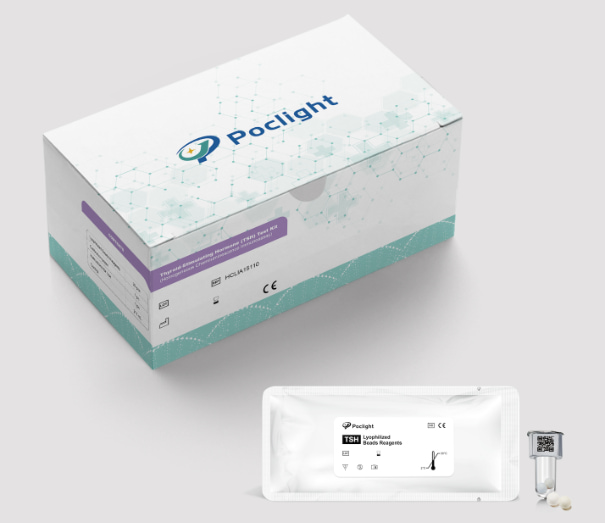
2) Freeze-dried reagents: no cold chain, 18 months shelf life, 2-30 degree storage and transport.
3) High accuracy and excellent precision - CV < 5%
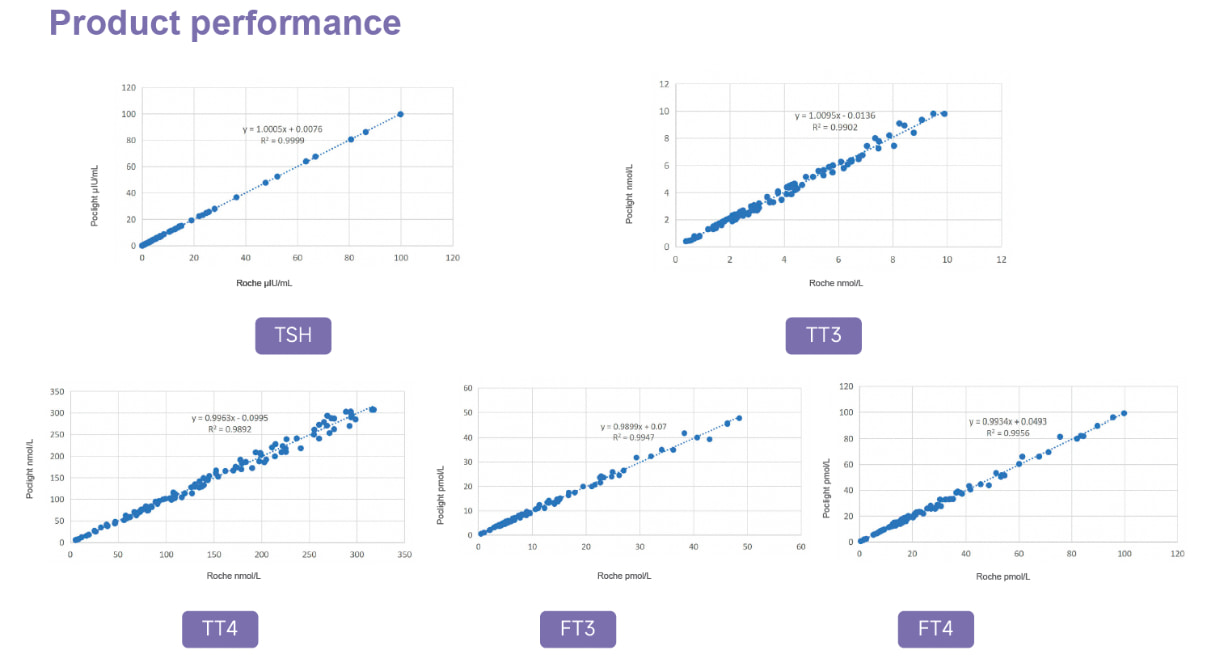
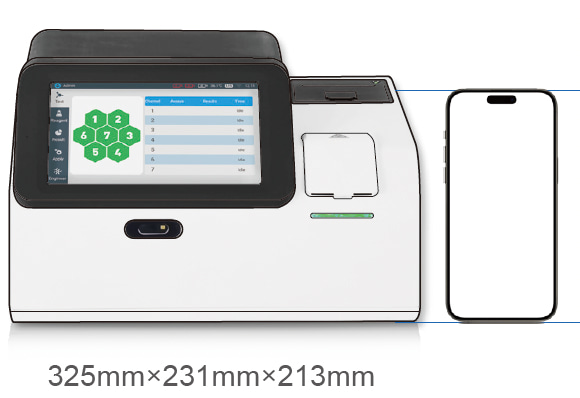
4) Applicable with the C5000 POC CLIA Analyzer: 3-Step Operation, Maintenance-Free
Contact us to learn about local distributors and pricing options for Poclight D-dimer solutions.



 IPv6 network supported | XML | Sitemap | Blog | Privacy Policy
Leave A Message
Scan to wechat :

 English
 français
 русский
 español
 português
 العربية
 日本語
日本語 Türkçe
 हिंदी
हिंदी Indonesia